


Interior Designer’s Home Colection 3
Wednesday, December 8, 2010


Keeping Your Kitchen Clean and Healthy Tips & Ideas!
If you want to live healthily then you must start from the kitchen. Seeing a dirty kitchen is so unpleasant and can bring bacteria and germs which can cause diseases. Kitchen is the place where we cook, produce food and it is the place for food storage, and it’s very crucial to keep that kitchen, no matter your kitchen design is hygienically. Your kitchen’s health also affecting your family’s health and so how do you exactly keep it clean and healthy?
We have to face it that it’s a tough job maintaining your kitchen in a good healthy and clean shape and here we are with our special treatments for your kitchen to keep it clean and healthy.
1. Make sure your kitchen gets sufficient sun light. Having enough sunlight else than for the purpose of lighting can also remove that annoying pests and vermin like cockroaches, fleas, rats where they just love damp, humid and dark area, like cockroaches, fleas, rats where they just love damp, humid and dark area.
2. Enough fresh air. Fresh air is needed and this can be achieved by having a large windows or sufficient windows sizes to keep the air circulating.
3. Always clean your kitchen from oil stain and food scraps. You need to clean from that oil stain and food scraps every time you cook and this is done to hinder your kitchen from germs and bacteria.
4. Never ever use plastic for your crockery or kitchen appliances. By the time you learn that plastic can cause a severe impact to our health as plastic is made from chemical and toxic substances and can become poisonous to your food.
5. Clean your bins routinely. You need to clean your bins routinely everyday and every time it’s full. Don’t leave them stay at your kitchen forever because it can cause not just unpleasant smell but also invite cockroaches, rats, fleas, and germs.
6. Clean your fridge container. Clean your fridge container located at the back of your fridge every twice a year at the least. This is needed prevent mould or fungus at that container.
Now how does your kitchen feels? Refreshing and great isn’t it. We’re happy if you stay healthy. Don’t go anywhere because there’re plenty more tips and ideas for you waiting. You can subscribe any emails to automatically keep update with the latest tips and ideas from us.


A Different Architecture in Sao Paulo at CORTEN House by Marcio Kogan
I can tell that this Corten House by the first look at this house in Sao Paulo, Brasil was designed by Marcio Kogan, an architect which has successfully build many amazing homes with few features which have their own characters. One thing that I found common at this home design is the use of wooden fence which almost block the view at the ground level of this house. This impressive house is made a through blend of stones, wood, COR-TEN steel, white mortar and glass. The use of floor to ceiling glass doors purposely done in that direction so the sun can reach the living area and the bedroom. It’s always amazing and full of surprises too that the striped wooden garage door has its own style of opening that will lead your car to the street. Want to know more on Marcio Kogan?


Tuesday, December 7, 2010
“Mamon Chino” in Costa Rica. Have you tried this exotic fruit yet?

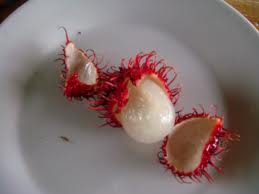
The "Mamon Chino", also known as “Rambutan”, is a colorful and interesting exotic fruit found on medium-sized tropical trees producing one of the most popular convenience snacks found in Costa Rica. Thought to be native to Malaysia, this fruit is also commonly found in Indonesia, the Philippines, Sri Lanka and Southeast Asia. The Mamo Chino is closely related to several other edible tropical fruits including the Lychee, Longan, and Mamoncillo. The name rambutan came from the Malay word rambut, whose literal translation means hairy, logical when you see the distinctive “hair” that covers the skin of this small fruit.
Description:
A hearty tree growing to an average height of 30-60 feet, the flowers are small and emit a faintly sweet pleasant scent. Mature trees in fruition brim with oval shaped fruit bunches that grow in a loose hanging clusters of around 10-20 specimens. The rather thick and clean peeling skin is generally reddish, orange or yellow in color and is covered with a thick hairy texture, making this fruit easy to identify. The coveted flesh of the fruit is translucent, whitish or a very pale pink, with a sweet, slightly acidic flavor, similar to that of grapes, but with it’s own uniquely
 tropical flavor. Be careful not to ingest the large single seed found buried within the sweet fleshy part, as it can be mildly poisonous when raw, but can be eaten when cooked properly. (I have personally never tried that, so anyone who has, feel free to chime in on how that works!) The seed is also said to be high in certain fats and oils valuable for industrial uses, as well as the oils are used to manufacture soap products. Beyond that, the roots of the Rambutan tree, as well as the bark and leaves are touted to have various medicinal uses and have been used in the production of certain dyes and coloring compounds.
What to do with the fruit:
A mainstay at Farmer’s Markets countrywide, roadside fruit stands are another great place to find the freshest Mamon Chino. Traditionally eaten by easily peeling the fruit with your fingers (it practically peels itself into two pieces) or you can often see locals open them with a quick flick of their teeth, popping the fruit directly into their mouth. The sweet creamy pulp of the fruit is easily enjoyed by putting the whole
 fruit inside the mouth and sucking on the pulp, remembering not to swallow the large seed. Disposing of the seed takes a practiced spitting launch, or better educated friends discreetly discard it into their hand or the bag the fruits came in. Despite the light color of the fruit's flesh, remember to be careful, as the juice will stain a dark brown color, the reason indigenous Indians used to use Rambutan to dye cloth. Though most commonly eaten fresh in Costa Rica, you can find Mamon Chino jams and jellies, and it is now even canned in some locations. It would be important for me to mention……when using the common Costa Rican name (Mamon Chino), its important to know that the word “mamón” in some Spanish-speaking countries can be slang for a “person who sucks”, or more commonly it can refer to a “large breast”. Just giving a fair warning to my friends before you go to the Farmers Market yelling “I want Mamones”!
Production:
When CAFTA (Central American Free Trade Agreement) was in negotiations throughout the region, Costa Rica noted that this new agreement presented an excellent opportunity to expand the production of this little known fruit to International markets. Costa Rica, having little actual data on the production of this fruit within the country had the government entity known as “MAG” (Ministerio de Agricultura), launch a nationwide in-depth study to find out more about the cultivators of this crop, with the hope of bringing them the economic benefits that would result from expansion to an International marketplace. The results of this extensive study, primarily conducted in Costa Rica’s “Brunca and Atlantic Región”, was the first stage of a strategic crop development plan conducted by Ingienero Leonte Llach Cordero for the National Program of Tropical Fruits, a division of MAG. The initial results are listed below:
Results of Study (Dec 2003)
• Total Cultivators 354
• Estimated Hectares in Production-720
• Approximate Total Production per year-5.5 millon kilos
• Number of Adult Trees (over 4 yrs)-46,365
• Number of Trees under 4 yrs-49,839
• Amount of Cultivators with less than 20 Hectars-350
• Amount of Cultivators with more than 20 Hectars-4
• Most productive season-July to September
• Percentage of Local Market Production-+90%
• Estimated number of trees per Hectar-100 trees
The results of this study were extremely helpful in furthering the development of this tropical fruit to be competitive in an international market. As the
 Ministerio de Agricultura (MAG) began a program to distribute some 40,000 tree starts to farmers, their enthusiasm, pioneer attitude and excellent farming practices, helped to dramatically increase overall production by a whopping 20% in only 6 yrs. This impressive number converted Costa Rica to be the top producer of Mamon Chino in all of Central America. Costa Rica now exports an incredible 1800 tons of this delicious fruit yearly.
 So my friends, the next time you see these hairy little fruits at your Costa Rica Hotel, the local Farmer’s Market, local “Pulperia” (market), or a roadside fruit stand…… Stop! Buy!! Eat!! Don’t be afraid of them!!! Not only are these tropical delights delicious and convenient to snack on, but they also have specific nutritional qualities, as well as ancient medicinal uses that might come in handy one day. Just please remember no yelling “I want Mamones!” while in Costa Rica when you go shopping, or you might end up with a black eye!!
Author: Kimberly Barron, originally from Malibu, California has lived in Parismina and Manuel Antonio, Costa Rica for 20 years. Starting as a certified tour guide, she spent 15 years managing fishing lodges on the Caribbean Coast and later 4* & 5* Hotels on the Pacific Coast of Costa Rica. Currently semi-retired, Kimberly still works as the Marketing Director for Byblos Resort & Casino and Hotel Makanda by the Sea.
Sources:
http://www.mag.go.cr/biblioteca_virtual_economia_desarr_sociolog/rambutan_censo.pdf
http://www.simas.org.ni/revistaenlace/articulo/1091
http://costaricahoy.info
http://en.wikipedia.org/wiki/Rambutan
http://nal.usda.gov
Sunday, December 5, 2010
Upli Burj, Bijapur
Upli Burj constructed in 1584, is an another interesting site in Bijapur (State: Karnataka). General Hyder Khan in the service of ruler Ibrahim II built this watch tower.
 This is a circular tower measuring 80 ft in height. There are 70 steps leading to the top of the tower where there are 2 canons. This tower is also known as Hyder Burj.
[Read Posts...]
This is a circular tower measuring 80 ft in height. There are 70 steps leading to the top of the tower where there are 2 canons. This tower is also known as Hyder Burj.
Subscribe to:
Posts (Atom)